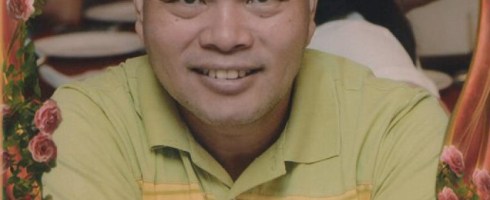
Mother and You

27 Mar

When was the last time your mother hugs you? When was the last time you see your mother smiling? When was the last time your mother asks or tells you something? Do you listen? Do you care or show concern? If your answer is yes, you are lucky enough.

God gave life to you. Your mother nourished that life for you. She carried you in her womb for several months. She could even smile after giving birth of a healthy baby. Sometimes, she never slept and felt anxious when you were crying if you had an illness.

As you grew older, your mother helped you to sit down, stand up and walk until you can do it by yourself. When you started to go to school, she taught you how to read, write and count things. She defended you and fought for your rights if somebody was doing wrong against you. She always provided things that you need. She advised and guided you all the time.  She felt very happy and proud whenever you achieved something or received an award. She felt sorry for you when you failed to achieve your dreams.

When you became a matured person and had your own family, your mother was always there and never left you. She took good care of your children. She helped you in doing household chores.  She felt very happy seeing her grandchildren playing, singing or dancing.  Sometimes, she threw out jokes with them.

The time passed by and your mother was getting older. Her body and mind were already deteriorating.  She often got sick. She could not sit down, stand up and walk by herself.  Your mother could no longer do the things that she used to do for you and your family when she was young.  She always felt the pains and sufferings due to her illness.

Did you feel sorry for her bad health condition? What immediate action that you did to prolong her life? Do you really love your mother? Do you really care? Do you let her go or not?

The Mother’s Prayers

25 Mar

These prayers were recited by my 92-year old mother last Holy Week 2016 when a miracle happened afterwards. She got recovered faster from serious illness.  You may try to recite it too.

Anghel a Bantay Ko

 (My Guardian Angel)

Anghel a bantay ko

Santos tan Santa kalagyo kon ngalan

Yabi awlo con pitagan

Siay engangaro mo tan tambay

Anghel ando moco ibukan

Sa bungat anan kaatapan

Kalulwa ko tan lalaman

Mampasimala makinabang

Sa Gloria mon kaysumin anggawan

Dasal bayo Malok

(Prayer before you sleep)

Malok akoyna kalulwa ko

Ando ka malok

Magbalayan ka nin Krus

Pigaw kala pakasindog

Taw tukson mangalaot

Ama Mi

(The Lord’s Prayer)


Ama mi eson ka sa langit

Mansambawan mi a ngalan mo

Mika sa komi a nagarian mo

Sunulon mi a nakom mo

Iti sa luta bilang sa langit

Biyan mo kami sa wanin

Kanon mi sa inawlo-awlo

Tan karuwan mo kami

Sa aw utang mi

Bilang pamingangaro mi konlan nagkautang sa komi

Ando mo kami ebin sumunol sa tukso

Tan ilipyas mo kami sa salban mangalaot. Amen

Ave Maria

(Hail Mary)

Ave Maria napno ka nin grasya

Siay katawan a Dios eson ya komo

bendita ka sa salban bawbaye

Tan bendito ya namaot a Bungan tiyan mo

A anak mo si Jesus

Santa Maria ina ng Dios

Ipasisingaro mo kami a makasalanan

Sa wanin tan sa oras

Ipati mi. Amen

Gloria

(Glory Be)


Gloria sa Ama, sa Anak tan Dios Espiritu Santo.

Kapara sa wanin tan sa oras a kaysumin angawan. Amen

Catawan kon Jesukristo

(Lord Jesus Christ)

Catawan kon Jesukristo

Dios a putog tan tawon pago

Sicay namalsa tan nanundon kongco

Sicay manlabyon ko muna sa salban

Sicay nikarunong sa salban

Cania naod mampangombabali koynan pago

Ibat sa matibulos a nakom ko; salban a kasalanan ko

A makamatin kalulwa ko; kayko na mangoman Catawan

Magkasalanan komo; gaw-on koynay magot a

Pamakatipan tan anamaot pakarayuon koynay salban

Makapinabo kongco sa salban kasalanan ko

Cania Catawan tambayan moko

Ta sicay manpasimalaan ko, karuwan mo ko pa komon

Alang-alang sa aw-irap tan pangamati mo sa krus. Amen

Tompol Ako

(I Believe)

Tompol ako sa Dios Ama

Makapangyayari sa salban

A namalsa nin langit tan luta

Tan tompol ako koni Jesukristo

Asay anak nan Dios, Catawan tamon salban

Naglalaman tawo ya ibat sa mablin pasda nan Dios Espiritu Santo

In-abing ni Santa Marian Birhen

Pinadiyadiya naya ni Poncio Pilato

Impasak ya ha Krus

Nati ya tan intabon

Nunaoy ya sa impiyerno

In ikatlon awlo nurong yan nabyay

Nuli ya sa langit; mantuklo ya sa wanan nan Dios Ama a makapangyayari

Itaw ya mangibat mako itin maghukom konlan mangkabyay tan nati

Tan tompol ako konan Espiritu Santo tan konan Santa Iglesia Katolika

Ta main pitatagman lan saw Santos tan makamot kawkasalan

Konan pamurong nan mabyay nan lalaman tan biyay a kaysumin anggawan. Amen

http://www.masmeron.com

Wishing you enough

10 Feb


“A healthy person has many wishes while a sick person has only one wish.” This is an Indian quotation that reveals how important our life is. Do you have many wishes or do you wish only one? What is life behind those smiles? Do you have enough strength and courage to resist pains and drive away sufferings? Do you wish that no more pains at the end?

Health Condition

A person wishes for a sound body and mind. It is not whatever you possess at present that makes your life longer but how healthy you are that counts. Living a healthy life that we treasured most today than having many treasures.

Financial Status

A person wishes for sufficient monies to have an abundant, comfortable and quality life. Fair incomes, earnings, funds and investments sustain, support and promote quality life. People in all sectors require financial resources to meet their basic needs such as foods, shelter, clothing, education and hospitalization.

Emotional Stability

A person wishes for emotional stability. Life is full of challenges and struggles. Every now and then, we do experience ups and downs; straight and crossroads in our lifetime.  Sometimes, we easily get stressed due to several issues and concerns as we drive up along the way.

Wishing you enough

As mentioned above, I wish you have a very good health with financial and emotional stability. I wish you enough throughout the years.

November First (Nov. 1)

1 Nov
Candles and Flowers

Candles and Flowers

All Saint’s Day

It has been a Filipino tradition to celebrate All Saint’s Day or All Soul’s Day at the cemetery.  Members of the family, relatives and close friends place on fresh flowers or customized basket of flowers at the tomb of their departed love ones. They also lit up candles and pray together silently for the souls of their relatives. They really miss their love ones who were already rested in peace and trying to accept the fact that their love ones will never come back again to see them.

Socialization

Aside from Christmas Day, the first day of November sometimes serves as reunion of family members, close relatives, friends, classmates and schoolmates. They bring something to eat like lunch meals and snacks. They talk about anything that sounds interesting to them. They talk about family matters, personal issues, childhood memories, school memorable moments, work experiences and success stories.  They enjoy their company and have some fun.

Significance of November First

November First does not only signify prayers in remembering our departed love ones.  It does not only remembering their heroism, legacy, advocacy, integrity, attitude and personality but also remembering them as greatest people in their own ways leading them towards eternal life.

November First does not only signify reunion or social gathering of all the people that are closed to us. It does not only mean of getting together for a purpose but also remembering those people who are still alive by showing our concern, love and care to them. Some of them are facing certain life challenges. Some people are living in poverty. Others are suffering from severe illnesses or diseases. Some of them are elderly people or persons with special needs. Those concerned citizens of the world have urgent basic needs which every person should pay more attention and able to respond as quickly as possible to their needs. These people need our help and attention more than those people that were rested in peace.

This is the true meaning of November First.  This is what our departed love ones wish and want for us to do. Life is too short for people who are doing great things than those who are doing nothing.

Distance Education: Creates Demand and Supply

11 Jun

Historical Development of Distance Education

Distance Education has been operated by technologies from the ancient times up to the present.  As what had been narrated from the stories in the Holy Bible, pharaohs, the ruling leaders of certain kingdom or empire, were sending their orders, letters and information to leaders of another kingdom or empire through trusted messenger.  The messenger carried the readily rolled documents and handed it directly to the ruling pharaohs or leaders of the other kingdom or empire.  The said message was very important to protect their own territories against invaders.

When postal services were available in most countries, the correspondence schools had been rampant.  Learners, regardless of age, sex and socio-economic status, tried to avail distance education through correspondence courses.  During those years, print media had been a great tool for the success of correspondence school.  Teachers of the correspondence school were sending course modules to the distant learners.  The learners read the learning materials.  Then, they answered the set of questions that had been asked and sent it back to the teachers in charge for checking, evaluation and assessment.

Demand creates its own supply

The given scenarios above clearly figure out the theory that demand creates its own supply.  The first scenario suggests that there was a need for pharaohs to send messages to the friendly allies as well as there was a need for leaders from the other kingdom to receive such warning messages or reminders for them to prepare their combat men and own people in case of troubles or big fights.  The second scenario suggests that people learn to go with informal education without face-to-face interactions such as correspondence course due to various reasons. For them, taking up correspondence courses through postal services was cost-effectively without leaving their present job.  Certified graduates of correspondence courses may be get instant job promotion due to learning skills acquired during their distant studies. When people got promoted into a new job position, they tend to receive higher salaries and good compensation in return which may support or sustain their family needs or their own personal needs.

Distance Education had been evolved as years passed by.  After the success of print media, broadcast media followed through the use of radio programs and T.V. programs.  The ‘talk’ programs in the radio developed awareness to the listening public in all fields of study.  The people need information medically on how to cure and prevent illnesses.  They learn ‘what to do’ in agricultural and economic practices, business enterprise, family and legal matters.  People who are watching educational T.V. programs also learn various things.  They learn ‘how to do’ things due to live demonstration on T.V. of methods and procedures needed for a particular product or process.

Upon the successful invention of the computer technologies such as hardware and software, the Distance Education promoters and advocates designed learning programs through audio tapes and video tapes.  They were sending audio tapes and video tapes to learners in remote places as supplement learning materials of the printed course modules. The cassette tape, Betamax, VHS, CD, VCD, LD and BD had evolved and grew rapidly. The evolution of these learning materials influenced the Distance Education at stake

Learners in all levels of education showed great demands on their learning.  Spending too much time in a public library browsing plenty of books for a particular topic needs patience and perseverance.  Instead of writing too long, learners tend to photocopy the pages of the book which spends much money and cuts off their daily school allowance.  Thus, the learners shift to go to the nearest internet café or computer for rent just to answer their school assignments.  When the internet technology has been introduced to school libraries, private and public schools up to college and universities have utilized the benefits of using the internet.  Learners started to avail those free or paid internet services just to cope up with their urgent assignments and serious studies.

The demands of the learners to information technologies open to schools, colleges and universities to offer courses online.  The courses that they offer respond to the needs and demands not only of the student-learners but also the working professionals and skilled individuals that need professional trainings for employment or job promotion.  The learner’s demands create more courses and more open universities that can serve the whole community as well.  Online students learn how to text, chat, email, participate in the forum, submit assignment online and study synchronously and asynchronously.  Thus, the first, second, third, fourth, fifth and next generations of Distance Education had been built up and developed for lifelong and life-wide learning.

Supply creates its own demand

When the wireless phone was introduced in the country in the early decade of 80’s, beep pagers increased in number wherein you have to look for a public telephone or pay phone once you received a beep sound from your pager around your waistline.  The said message tells the receiver to respond immediately to the caller.  Within that decade also when huge Smart mobile phones were introduced.  It was actually a line telephone but cordless that has monthly bill.  This huge mobile gadget got attract several families at home of Overseas Filipino Workers (OFW).  The minimum fixed rate of two thousand pesos excluding international calls was not a big deal for overseas workers who were earning much abroad.  The Smart Communications produced more units for their local markets. As one of the pioneers of the mobile communications in the country, they sold cellular phones competing with other companies like Nokia, Erickson and Motorola.  Along the business ventures, the Smart Company sold sim cards to market their mobile business and compete with other companies like Globe and Sun. With the introduction of this mobile technologies, people learn to buy these gadgets even at high cost for a unit.

The continuous supply of mobile technologies locally and abroad create demands for computer technicians for technical assistance and trouble-shooting purposes.  The production of internet-ready mobile devices such as smart phones, tablet, netbook and laptop that were displayed in the shopping malls attract learners and other stakeholders to have one or more devices.

The various software applications installed in each smart phone increase buyers of touch-screen mobile devices. The Distance Education (DE) institution provides opportunities for learners to use the beneficial software applications in their online learning.  For instance, they should learn how to convert files into readable documents.  There are software applications that can convert video files into audio files only.  The technical side of the DE institution designed interactive software programs which facilitate teaching and learning.  Thus, a well-designed course has been developed for online learners.

The supply of great computer programs in the information markets create more demands on what particular courses will be appropriately and timely be offered by the DE institutions.  It can also create what particular DE curriculum will be planned, implemented, evaluated and assessed.  If the said curriculum had been proven effective for employment and business, it creates social stigma or influence peers to enroll in this particular course of study in order to land on a job or business ventures that fits and qualifies them.  This is one valid reason for the implementation of the K to 12 Curriculum of the Department of Education in the Philippines.

Framing up the Distance Learning today

Distance learning or Online learning faces challenges today for various reasons.  First, distance learning is quite different from a classroom setting of learning.  Online learners do everything online and offline as well. They do their tasks independently anytime, anywhere.  This method of learning supports the theory of Jean Piaget about learning by doing wherein the online students learn through actual experience. This method of learning also supports the theory of B.F. Skinner about constant repetition of certain situation or constant practice makes the task perfect wherein students did particular task and continuously and repeatedly doing the same task until they attain it completely and correctly.  Thus, lifelong learning gets in.

Since no face to face interaction with the teacher in the distance education setting of learning, feelings and emotions of the learners are hardly to detect by the online teacher unless they tell it directly to the teacher what they really feel.  Second, the teacher may subjectively evaluate and assess learners based on their outputs.  He may not assure if these outputs be truly authentic enough as their own or work outputs of somebody else. Third, distance education may or may not provide equal opportunities to all in terms of lifelong learning and life wide learning is concerned.  The DE may provide equal opportunity for those people living in the remote places; for those working professionals that aim for job promotion or gain skills and competencies; for those people who cannot attend classes in a regular classroom for whatever reasons.  On the other hand, the DE may not provide equal opportunity for those people who do not have any computer gadgets; for those who have computer gadgets but lack of skills in computer operation; for those who have computer gadgets and computer skills but no internet access; for those people with internet access but lack financial resources to sustain its online connectivity for lifelong and life wide learning.  Fourth, distance learning allows open learning resources which hardly determine the real, correct, accurate, precise, acceptable, reliable and valid information in the world-wide web.   Certain websites welcome everybody to edit the content or information within the website.  Finally, distance learning should be equipped with highly qualified online teacher; well-designed learning materials; appropriate means of teaching and learning experience; cost-effective and learner-centered approach. Distance learning also applies other learning theories such as constructivism, realism, essentialism, existentialism, pragmatism, naturalism, and constructionism.  These learning theories are observed in formal and informal settings of learning.

In the Philippines, Distance Education reaches its potential expansion locally and abroad.  There is an increasing number of colleges and universities in the country that open its doors for Distance Education.  Other big universities agreed upon; collectively and collaboratively developed a consortium for the establishment and implementation of online course programs.  Their vision and mission is to attain high quality, accessible and affordable education in the country.  Literate citizens, equipped with values and competencies, help to build the nation’s economy.

https://livegoodtour.com/Masmeron

Manggagawa Ako (I am a Worker)

1 May

Manggagawa ako at ngayon ay araw ko

Manggagawa ako na handang tumulong sa inyo

Manggagawa ako na laging nakaantabay at sumasaklolo

Manggagawa ako na may dignidad at mga karapatan tulad ninyo

Hangad ko rin ang tulong, proteksiyon, pagkilala at malasakit ninyo.


Magsasaka ako na nagtatanim, nag-aalaga at nag-aani ng mga pananim umulan ma’t umaraw para may pagkain kayo

Mangingisda ako na lumalaot, sumisisid sa ilalim ng dagat at nangingisda para may maihain sa hapag kainan ninyo

Tindera ako na naglalako ng sari-saring pagkain sa kalsada at mga kagamitan sa palengke para sa pangangailangan ninyo

Kusinera ako na namamalengke, nagluluto ng masasarap at masustansiyang pagkain para sa ikasisiya ninyo

Diyanitor ako na naglilinis sa loob at sa labas ng gusali para maging malinis ang paligid ninyo

Basurero ako na kumukolekta ng mga basura mula sa bahay ninyo kahit na masangsang ang amoy nito para mapanatiling mabango ang paligid ninyo.


Gumagawa ako ng banig mula pandan at buli sa araw at gabi para may mahigaan kayo

Naglalaba at namamalantsa ako ng mga damit kahit na pagod na ang katawan ko para may maisusuot kayo

Nag-aalaga ako ng mga bata, may-sakit at matatanda kahit na nahihirapan ako para makapagtrabaho kayo

Nagmamaneho ako ng pampublikong sasakyan para maihatid at makarating agad kayo

Naggugupit ako ng buhok, naglilinis ng mga kuko at nag-aayos ng mukha para maging maganda kayo

Guwardiya ako sa loob at sa labas ng gusali para maprotektahan ko ang kaligtasan ninyo..


Trabahador ako sa pabrika na maghapong nagtratrabaho

Trabahador ako na gumagawa ng mga gusali at mga kalye ninyo

Trabahador ako na labis na nagsusumikap upang mabuhay ako pati pamilya ko

Trabahador ako na humihiling ng umento sa sahod at iba pang benepisyo upang umunlad ang buhay ko.


Simula sa araw na ito sa aking pamumuhay

Mabigyan sana ako ng maginhawang buhay;

Mabuhay sana ako ng maayos at matiwasay

Masaya at kalidad na buhay ang hangad na taglay;

Upang lahat tayo ay mabuhay ng pantay-pantay.


The Battle for a Reason by Renato Mas Meron

28 Apr

The Battle to Win

Some people have the battle to win against their opponents or competitors.  Athletes in boxing, basketball, volleyball, baseball, soccer and other sports want to win in a battle.  Sport’s fans also want their idols to win.  Contestants in singing, dancing or talent competition show their best performance to win the battle.

The Battle to Change

Some people have the battle to change.  They want to change the society where they belong.  Some people want changes in the government system that offers public services.  Some people change as they grow and develop.  These changes in various ways can be obviously observed by anyone. They might change physically, intellectually, emotionally, socially, economically and spiritually.

The Battle to Heal

Some people have the battle to heal.  People with sickness or illness want to be completely healed.  They ask for medical help from the professional doctors.  They ask for spiritual help from the Almighty One.  People who got in despair or broken-hearted need emotional recovery or fast healing.

The Battle to Live

Some people have the battle to live.  Victims of crime like in drug-trafficking, human-trafficking, homecide and other crimes who were sentenced by the highest court with death penalty or capital punishment need the battle to live.  These people need your prayers to save them from execution. Pro-life supporters pursue and promote their advocacy for rights to live of every citizen of the world  and have a quality, peaceful and happy life.

https://link-me.io/@masmeron

School that Educates People (Step) to Move by Renato Mas Meron

19 Apr

STEP to start the day,
STEP to clean the way;
STEP to plant the seed,
STEP to move ahead.

STEP to conduct an experiment,
STEP to protect the environment;
STEP to search the truth,
STEP to serve them both.

STEP to work properly,
STEP to help the needy;
STEP to do right action,
STEP to develop innovation.

STEP to teach the children,
STEP to learn more than ten;
STEP to be a better Valenzuelano,
STEP to be a true Filipino.

His Presence, Message and Legacy

18 Jan

Wearing a yellow raincoat, Pope Francis waves to the faithful as he arrives in Tacloban, Philippines, Saturday, Jan. 17, 2015. A rain-drenched but lively crowd wearing yellow and white raincoats welcomed Pope Francis in the typhoon-ravage central Philippine city of Tacloban early Saturday, chanting "Papa Francesco, Viva il Papa!" (AP Photo/Wally Santana)

The 2015 remarkable visit of Pope Francis in the Philippines brings up the real essence of Christian life in the country. The Filipino people really love him and Pope Francis also loves them too.

His Presence

When Pope came out from the airplane, he smiled to the Filipino people in the airport. His charming smiles may suggest that “Here I am.”  His presence alone was so significant to the Filipino people. Every Filipino was so happy and excited to see Pope Francis in person. Everybody felt the love at the airports, on the streets, inside the churches, at the mall and university, on the park and even at homes. His presence gave blessings for the persons with physical impairments. His presence provided hope for person with ailments. Pope Francis blessed the babies, children, youths, adults and elders. His presence shows genuine concern to victims of typhoons, earthquakes and to the poor families in the Philippines.

His Message

Pope Francis delivered an awesome message in every place of his visit in the Philippines. His inspirational message deeply-derived from his heart is truly sensible and gets political, psychological, social, intellectual and spiritual impacts to every citizen of the Philippines. The Filipino people attentively listened to his relevant speeches in spite of long-hours of standing in the middle of the rain. The religious faith of the Filipinos retained and sustained regardless of natural calamities and life challenges they had been experienced in the past up to the present times. His message focused on helping the poor ones which applies the true Christian life.

His Legacy

Pope Francis builds his Christian legacy for the Filipino people. His advocacy to help especially the poor ones is absolutely amazing. He touches one’s life through his mission. He listens to anybody attentively.  He speaks well with a sense of humor. He comes to you directly, hold your hands and bless you gracefully. With all your love, care and concern to us, the Filipino people would like to say “Thank you very much. God bless you, Pope Francis.”


Mobile Science Education

30 Nov

Based on the different studies and experiences of schools doing distance education or online learning, the author proposes a mobile education which can shape up the K to 12 science curriculum into a functional one and convenient to the learners.

Mobile Science Education Model (MSEM)

In the infographic study done by Ingenious Mobile Business in the Philippines this year, they had found out that 91% of Filipinos have mobile phones and 56% of them have smart phones. Mobile devices have become such an indispensable part of daily life.  About 66% of Filipinos sleep with their phones; 48% eat with their phones; 20% drive with their phones. About 71% of the respondents say that they won’t leave the house without their phones.

Mobile devices are used for multi-tasking such as 62% for listening to music; 42% for watching tv; 58% are using the internet; 27% are reading online magazine; 30% are playing games; 37% are watching movies and 21% are reading e-books.

By 2017, they estimated 10 billion mobile connections wherein 80% of time on mobile is spent on apps.  An average consumer actively uses 6.5 apps in 30 days.  Analysts estimated 56 to 82 billion downloaded apps in 2013 that could reach 200 billion in 2017. PayPal mobile handled almost $14 billion in payment volume in 2013.  In the Philippines, almost 100 million Filipinos are on mobile sending out more than 1 billion SMS per day.  About 33 million Filipinos are now connected to the internet. The Philippines has emerged as the fastest growing market for smartphones in Southeast Asia.  About 93% of Filipinos are part of a social network wherein 33 million are active on Facebook; 81% of those active members are below 30 years old. (PayBux Channel, 2014)

What is next for this generation? Introducing the Mobile Science Education or MSE. The Mobile Science Education is an open app which aims to provide online science courses intended for learners under the umbrella of K to 12 curriculum. Every school in the public and private sectors should have a computer room or information technology center which is fully equipped and designed for online learning.  Every learner with mobile device has freely download and install the Mobile Science Education app from the internet.

The learning modules are derived from the Department of Education who serves as the content provider.  Curriculum developers and science experts have created the learning modules. Officially enrolled students in public and private schools serve as the online or mobile learners.  It is free to register and use the mobile science education app interactively. The course programs are offered in all grade levels that focus on Earth Science, Biology, Chemistry and Physics. Online learning can be accessible through cable connection in schools or wireless broadband connection at home. Learning resources centers help the students on acquiring information worldwide.  These learning centers are school libraries, national library and Library of Congress.  There is a collaborative network among government and non-government organizations for the successful planning and implementation of Mobile Science Education.

Teachers and learners have respective roles to perform their duties and responsibilities. Classroom teachers should act as the facilitators of learning.  Learners should do the activities accordingly with their own time, pace and wherever they are. However, learners should have meet the deadlines in submitting their works. Further instructions are given in advance by the teacher.  There is a room for conferences, inquiries and topic clarifications.

The budget allocation for launching the Mobile Science Education app is covered by the Department of Education, National and Local budget, TESDA, OWWA, Employers Association of the Philippines and other government and non-government organizations.

Integral Components of Mobile Science Education (MSE)

Free Membership and App Download

Course Programs

  • Earth Science
  • Biology
  • Chemistry
  • Physics

Accessibility

  • Cable Connection
  • Wireless Connection

Resource Centers

  • Local School Libraries
  • National Library
  • Library of Congress

Collaborative Network

  • Public and Private Schools
  • Department of Education
  • Technical Skills and Development Authority (TESDA)
  • Commission on Higher Education (CHED)
  • Chamber of Commerce and Industry
  • Employers Association of the Philippines
  • Philippine Overseas Employment Administration (POEA)

Teacher’s Initiatives

The teacher in the MSEM system initially performs his duties and responsibilities in the learning process. He should provide learning modules with concise and measurable objectives.  He is obliged to give inputs for the student’s learning and able to facilitate teaching and learning situations competently. The teacher should take some considerations to working students with limited time to study. He should understand his learners and carefully responsive in making up decision for his action.. Neither he takes for granted his position nor abuse his authority for any undesirable statements or actions.

Learner’s Incentives

The learners have certain incentives in piloting the Mobile Science Education app such as

  • Grade incentives
  • Scholarship grants
  • Financial assistance
  • Free mobile device

Budget Allocation

  • Local and National government funds
  • Department of Education
  • School funds

Based on the relative performance of the learners, the Mobile Science Education app has possible claims for its effective mechanism and applicability in terms of achieving high quality standards of teaching and learning in the Philippines particularly on Science Education for K to 12 Curriculum. The urgent need for this innovative transition from traditional setting of learning into integrated, open and interactive mobile science education may lead into socio-economic development and educational excellence in the next generations to come.